July 29, 2026 8:56 pm
CRIT Nation, Parker, AZ
July 29, 2026 8:56 pm
CRIT Nation, Parker, AZ

On a Proposed Ordinance to Amend
the Government Code
to Add an Article 6. Standard of Conduct and Ethics


Dates:
Thursday, November 14, 2024 at 5:30 P.M.
Saturday, November 16, 2024 at 1:00 P.M.
Monday, November 18, 2024 at 9:00 A.M.

Location:  Colorado River Indian Tribes Tribal Council Chambers

The proposed Ordinance will amend the Government Code by adding an Article 6. Standard of Conduct and Ethics, which will govern the actions and activities of Tribal Council members to ensure they are carried out in the highest ethical standards, and to set forth consequences for violating these standards.

Written comments from the public will be accepted at the address below up until 5:00 p.m., Wednesday, November 20, 2024. Any comments submitted will be made a part of the legislative record and will be considered for incorporation into the final Code.

Submit comments to:  Colorado River Indian Tribes
Office of the Attorney General
26600 Mohave Road Parker, Arizona  85344

The proposed Code can be viewed online and printed just follow this link C_Standards of Conduct Ethics _08062024 Edits


Copies will also available at the Tribal Administrative Bldg. and the CRIT Library, located at 26600 Mohave Road, Parker, Arizona.

Per BIA Electric, Mochem Housing in the Valley will not lose power


Según BIA Electric, Mochem Housing en el valle no se quedará sin electricidad.

July reporting continued to focus on how Arizona and the wider Colorado River Basin are preparing for reduced water supplies, with attention on Tribal water leadership, advanced water purification, and low reservoir levels.

Lake Powell Chronicle reported on the growing role of Tribal Nations in Arizona water policy. The article focused on how Tribal water rights, settlements, and planning are becoming more central as the state and federal government respond to long-term shortages. The reporting also reflects a broader shift across the Basin, where Tribal Nations are not only water rights holders but key governments in future river decisions.

Arizona water agencies are also looking at new supply options. AMWUA reported on advanced water purification, a process that treats recycled water to drinking-water standards. The technology is receiving more attention as cities look for options beyond traditional surface water, groundwater, and stored credits.

At the same time, Lake Powell remains under serious pressure. ABC News reported that the reservoir is nearing “dead power pool,” the elevation where water levels become too low for Glen Canyon Dam to generate hydropower. Newsweek also reported on concerns about Lake Powell and Lake Mead, including ideas being discussed by scientists and water experts as both reservoirs remain low.

John Fleck at Inkstain described the reservoir conditions as a grim Colorado River milestone. The continued decline of Lake Powell and Lake Mead shows how storage, hydropower, and future water deliveries are tied together. When the reservoirs fall, the issue is not only how much water remains but how the system can continue operating.

California water issues also remained part of the regional picture. Smart Water Magazine reported that California voters rank water among their top priorities for the next governor. While California’s water system is different from Arizona’s, the state remains part of Colorado River negotiations and shares in decisions over future Lower Basin reductions.

The July reports show several parts of the water discussion moving at once. Tribal Nations are gaining more recognition in water policy. Cities are exploring advanced purification. Lake Powell and Lake Mead remain low. States are still facing pressure to plan for a river system that can no longer support all demands in the same way.

What does this mean for CRIT?

For CRIT, the reporting on Tribal water power is directly relevant. It shows that Tribal Nations are becoming more visible in statewide and Basin-wide water decisions, especially as shortages force governments to revisit how water is managed.

CRIT’s senior Colorado River rights are a major part of that larger water policy landscape. As Arizona cities look at reuse, purification, and future water supplies, Tribal rights and Tribal governments remain central to any complete discussion about the river’s future.

The Lake Powell reporting also matters because reservoir levels affect federal operations, hydropower, and shortage planning across the Basin. CRIT’s Water Code and Water Resiliency Act help guide local water management as those conditions change, while the Personhood Resolution reflects the Tribe’s cultural and environmental connection to the Colorado River. (more…)

July reporting continued to focus on how Arizona and the wider Colorado River Basin are preparing for reduced water supplies, with attention on Tribal water leadership, advanced water purification, and low reservoir levels.

Lake Powell Chronicle reported on the growing role of Tribal Nations in Arizona water policy. The article focused on how Tribal water rights, settlements, and planning are becoming more central as the state and federal government respond to long-term shortages. The reporting also reflects a broader shift across the Basin, where Tribal Nations are not only water rights holders but key governments in future river decisions.

Arizona water agencies are also looking at new supply options. AMWUA reported on advanced water purification, a process that treats recycled water to drinking-water standards. The technology is receiving more attention as cities look for options beyond traditional surface water, groundwater, and stored credits.

At the same time, Lake Powell remains under serious pressure. ABC News reported that the reservoir is nearing “dead power pool,” the elevation where water levels become too low for Glen Canyon Dam to generate hydropower. Newsweek also reported on concerns about Lake Powell and Lake Mead, including ideas being discussed by scientists and water experts as both reservoirs remain low.

John Fleck at Inkstain described the reservoir conditions as a grim Colorado River milestone. The continued decline of Lake Powell and Lake Mead shows how storage, hydropower, and future water deliveries are tied together. When the reservoirs fall, the issue is not only how much water remains but how the system can continue operating.

California water issues also remained part of the regional picture. Smart Water Magazine reported that California voters rank water among their top priorities for the next governor. While California’s water system is different from Arizona’s, the state remains part of Colorado River negotiations and shares in decisions over future Lower Basin reductions.

The July reports show several parts of the water discussion moving at once. Tribal Nations are gaining more recognition in water policy. Cities are exploring advanced purification. Lake Powell and Lake Mead remain low. States are still facing pressure to plan for a river system that can no longer support all demands in the same way.

What does this mean for CRIT?

For CRIT, the reporting on Tribal water power is directly relevant. It shows that Tribal Nations are becoming more visible in statewide and Basin-wide water decisions, especially as shortages force governments to revisit how water is managed. (more…)

July 13 reporting showed drought pressure moving from long-term forecasts into visible impacts across Arizona and the Upper Basin.

In southern Arizona, the San Pedro River recorded zero flow at a key monitoring point near Sierra Vista. The Arizona Republic reported that the river ran dry there for only the second time in 122 years of records. The San Pedro is one of Arizona’s last free-flowing rivers, and dry conditions along the river show how drought, groundwater pumping, and heat can affect local ecosystems.

Scottsdale continued reviewing its long-term water planning. KJZZ reported that city officials are preparing for possible Colorado River cuts, including a possible large water-use ordinance. KJZZ reported that Scottsdale relies on Colorado River water for about 70% of its supply, with some parts of the city depending on it even more. The city has also purchased water credits from Harquahala Valley and uses advanced water treatment and recharge as part of its water planning.

Arizona also extended groundwater-related support in Pinal County. AZ Free News reported that state lawmakers extended Pinal groundwater fee relief and irrigation project funding through 2030. The funding is tied to agricultural water planning in a region that has already faced reductions to Colorado River supplies.

Water demand from data centers remained part of the state’s water debate. The Cool Down reported that Arizona paused data center tax breaks for three years after public concern over water and power use. The issue shows how large technology projects are becoming part of water planning as the state considers future growth.

In the Upper Basin, Colorado water groups are working to keep more water in rivers during extreme drought. Steamboat Pilot & Today reported on efforts by the Colorado Water Trust to support river flows, including work connected to the Yampa River and reservoir releases.

The Salt Lake Tribune also reported on a new study measuring how much water Flaming Gorge Reservoir loses to evaporation. That information could help water managers better understand reservoir losses as Lake Powell and other parts of the system remain under pressure. (more…)

Reports show how water concerns are reaching different parts of the West, from city conservation programs in Arizona to tribal water settlements, drought impacts, and ongoing Colorado River negotiations.

In Arizona, cities are encouraging residents to use less water. SignalsAZ reported that Surprise is offering rebates for eligible water-saving improvements. 12News reported that Scottsdale residents can also receive rebates for conservation upgrades. These programs reflect how cities are trying to reduce demand as Colorado River supplies become less reliable.

Tribal water rights remained a major issue. Navajo Times reported that the Diné water settlement has stalled after objections from Colorado, New Mexico, Utah, and Wyoming. The settlement involves the Navajo Nation, Hopi Tribe, and San Juan Southern Paiute Tribe and is tied to water infrastructure and access in northeastern Arizona. The four Upper Basin states raised concerns about how the water could be used or leased in the future.

Drought impacts continued in Arizona. Congressman Eli Crane’s office reported that the U.S. Department of Agriculture issued drought disaster designations for several Arizona counties. Gila Valley Central reported that Graham and Greenlee counties were declared primary disaster areas because of drought. These designations can make assistance available to eligible farmers and producers.

The University of Arizona Water Resources Research Center released a toolkit for domestic well owners. The guide covers well maintenance, water quality, testing, and drought planning. It is especially relevant for rural residents who rely on private wells.

Water demand from data centers also remained part of the discussion. KTAR reported on concerns over whether data centers are draining Arizona’s water. As technology projects expand, their energy use, cooling needs, and long-term water demand are drawing more attention.

Across the West, drought pressure continued. KSL reported that experts are watching specific regions and industries facing severe drought impacts. Cowboy State Daily reported that an irrigation district in eastern Wyoming warned water could run out by early August.

Colorado River negotiations also remained unsettled. KNPR reported on where Southern Nevada stands as the current river management agreement nears expiration. KLAS reported that Colorado’s water commissioner said drought conversations remain difficult. KUTV reported that Upper and Lower Basin states failed to reach an agreement on Lake Powell.

Weather added more uncertainty. Several outlets reported rising odds of a strong El Niño. While El Niño can bring wetter conditions to some areas, it does not guarantee drought relief for the Colorado River system. Snowpack, runoff, and soil conditions will still determine how much water reaches reservoirs.

The reports show water planning happening on several fronts. Cities are offering rebates, rural residents are receiving well guidance, Arizona counties are facing drought designations, tribes are waiting on settlement progress, and Basin states are still negotiating future river rules. (more…)

Arizona cities are pressing for clearer answers on water they stored underground as the state prepares for possible Colorado River cuts.

KJZZ reported that Phoenix-area cities and the Arizona Water Banking Authority are in disagreement over how stored Colorado River water should be distributed during shortages. Since the late 1990s, excess Colorado River water has been stored underground as a backup supply. With new river rules expected and cuts likely for Central Arizona Project users, cities want to know how much water they will be allowed to recover, when it would be available, and what requirements may come with it.

The question is not just how much water exists underground. It is also how the Water Bank decides who gets access and how much should be saved for future shortages. KJZZ reported that Water Bank officials are considering policies that could limit distribution or require cities to show conservation efforts before receiving stored water.

Scottsdale is also adding to its stored-water portfolio. KJZZ reported that the city approved an $8.25 million purchase of water credits from Harquahala Valley through the Central Arizona Project. The credits represent water stored underground for future use. According to KJZZ, the purchase amounts to about 15,000 acre-feet of water and brings Scottsdale’s long-term water credits to just under 300,000 acre-feet.

The purchase shows how cities are looking beyond current deliveries and preparing for uncertainty. Stored credits can help provide backup during shortages, but they still depend on access, recovery, and long-term management.

Drought conditions are also affecting Arizona counties. Congressman Eli Crane’s office reported that the U.S. Department of Agriculture issued drought disaster designations for several Arizona counties. Gila, Pinal, and Yuma counties were elevated to primary disaster status in a later designation, while other counties were listed as contiguous. The designations can help make agricultural assistance available to eligible producers affected by drought.

Groundwater recharge remains part of the broader water planning conversation. Agri-Pulse reported that California lawmakers are again trying to address permitting delays for groundwater recharge projects. The bill discussed in the report would give farmers and water agencies more flexibility to capture high flows and move water underground when wet conditions allow. Supporters say current permitting can be too slow for short windows of available water.

The issue connects to Arizona’s own recharge discussions. Across the West, water managers are looking at ways to store more water underground during wet periods so communities and farms have more flexibility during dry years.

The legal side of western water also continues to grow. The Colorado Sun reported that the U.S. Supreme Court agreed to hear Nebraska’s lawsuit against Colorado over the proposed Perkins Canal. Nebraska says the canal is needed to bring South Platte River water into Nebraska under a 1923 compact. Colorado officials say the state is complying with the compact and will defend its water rights. (more…)

Arizona’s water coverage centered on a practical question: if the Colorado River keeps shrinking, how much backup water is actually available, and who can use it?

KJZZ reported that Phoenix-area cities are asking for clearer answers about Colorado River water stored underground by the Arizona Water Banking Authority. The Water Bank was created in 1996 to store excess Colorado River water underground for use during a shortage. Cities that rely on the Central Arizona Project say they need to know how much of that stored water they can access, when it would be available, and how it would be recovered.

The issue is becoming more urgent as federal officials consider new Colorado River operating rules. Arizona Farm Bureau News reported that Arizona water officials are pushing for the Lower Basin proposal as an alternative to deeper federal cuts. The proposal includes mandatory reductions across Arizona, California, and Nevada, along with additional voluntary savings through 2028.

The Arizona Farm Bureau also reported that the Central Arizona Project is now projecting a 14% shortage in its municipal water pool instead of 20%, partly by using water from Lake Pleasant and wells in Yuma. Even with that smaller projected shortage, cities and farms are still preparing for less water.

Agriculture remains a major part of the discussion. Arizona farmers are watching possible cuts closely because reductions to Colorado River water can affect planting decisions, crop choices, and operating costs. Those changes can also move beyond farms, reaching workers, local economies, and food supply chains.

Arizona is also looking at how to keep more water in the state. KJZZ reported that more than 95% of precipitation that falls in Arizona is lost to evapotranspiration. The reporting was based on the Arizona Tri-University Recharge and Water Reliability Project, which is studying ways to capture more rain, snowmelt, and runoff before it is lost to evaporation or plant use. The project is also looking at how more water can be moved into aquifers through recharge.

That research connects directly to questions about groundwater. As Colorado River supplies become less reliable, cities and rural areas are paying closer attention to underground storage, recharge, and long-term access to stored water.

The Desert Review reported that the Central Arizona Irrigation and Drainage District secured up to 10,000 acre-feet per year of new water supply from the Mojave Groundwater Bank in California. The agreement is another example of Arizona water users looking outside traditional supplies as Colorado River shortages continue.

Lake Powell also remained under pressure. The Guardian reported that the reservoir could fall to unprecedented lows after poor snowpack and limited spring runoff. KUTV and Newsweek reported on a proposal from scientists to move more water from Lake Powell to Lake Mead, arguing that storing more water in Lake Mead could reduce losses and protect downstream supplies. The idea is part of a larger debate over how the two major reservoirs should be managed as both remain low. (more…)

If you’ve seen this missing child, please click this link below to help locate her.

https://www.missingkids.org/poster.print.html/NCMC/2084582/1

As CRIT Media approaches this year’s first newspaper, we’re inviting the community to help us celebrate the amazing mothers in our lives this Mother’s Day.
If you’d like to honor a special mom, you can submit her photo along with a short message sharing why she means so much to you and what makes her an incredible mother. Her photo and bio will be featured in the upcoming Manataba Messenger Newspaper.

As part of this celebration, we’re also offering complimentary family portrait sessions in our Media studio for any selected participants who would like to take part or you can send us a photo with a summary explaining why you are nominating this special mom for Mothers Day!

The deadline for entering is May 1st.
Please email critmedia@crit-nsn.gov to nominate a special mother!

The prolonged drought combined with the lowest winter snowpack on record is requiring swift actions to protect this vital water system  

WASHINGTON – Long-term drought has reduced Colorado River system storage to about 36 percent of capacity, and the combination of the lowest snowpack on record and record-breaking March heat has further intensified drought conditions across the Basin. These compounding factors are creating elevated risks to essential water and power infrastructure that supply water to more than 40 million people, underscoring the need for immediate action.

Lake Powell’s water year minimum probable inflow is forecasted at just 2.78 million acre-feet—29% of historical average and one of the lowest on record. Reclamation’s April “24 Month Study” projects Lake Powell may decline to below 3,490 feet—the minimum power pool level—by August 2026 without major intervention. If Glen Canyon Dam declines below 3,490 feet, water releases would be only through the river outlet works, which could cause operational issues, uncertainty for users, downstream impacts, instability in regional power and water supplies, and a reduction in power generation.

Secretary of the Interior Doug Burgum met with Governors for the seven basin states, Arizona, California, Colorado, Nevada, New Mexico, Utah and Wyoming, and their designees again today to discuss the concerning hydrology and plans for operations.

“I am grateful for the Governors and their teams working diligently to find a solution to the complex challenges created by these unprecedented drought conditions which require immediate action,” said Interior Secretary Doug Burgum. “Interior and Reclamation continue to coordinate with the basin states, tribes, Mexico and basin stakeholders as we make the decisions necessary to operate and protect the system.”

To stabilize the system, Reclamation is moving quickly and initial plans include adding up to about 2.48 maf of water to Lake Powell by moving water from the upstream Flaming Gorge Reservoir and by reducing releases from Lake Powell.

Through the 2019 Drought Response Operating Agreements, Reclamation is intending to release 660,000 acre-feet to 1 maf from Flaming Gorge Reservoir from April 2026 through April 2027. In addition, Reclamation is intending to reduce the annual release volume from Lake Powell to Lake Mead by 1.48 maf—from 7.48 maf to 6.0 maf—through September 2026 by utilizing section 6E of the Record of Decision from the final 2024 Supplemental Environmental Impact Statement for near-term Colorado River Operations.

Together, these actions are expected to increase Lake Powell’s elevation by approximately 54 ft to at least elevation 3500 feet by April 2027. Through the current, ongoing DROA process, the basin states, tribes and partners continue to provide feedback related to the proposed releases. A final decision will be coming next week.

Flaming Gorge Reservoir now holds about 3.1 maf of water, which is 83% full. These actions are expected to lower the reservoir’s elevation by roughly 35 feet over the next year to approximately 59% of capacity. This will have no effect on contracted water rights at Flaming Gorge or Lake Powell. No additional releases from the other upstream initial units of the Colorado River Storage Project Act—Blue Mesa and Navajo reservoirs—are planned at this time, due to their low water levels and poor forecasted inflows.

“Given the severity of the risks facing the Colorado River system, it is imperative that we take action quickly to protect a resource that supplies water to 40 million people and supports vital agricultural, hydropower production, tribal, wildlife, and recreational uses across the region,” said Assistant Secretary — Water and Science Andrea Travnicek. “As we weigh current conditions and prepare for future operations by working with states, tribal nations and stakeholders, the Department of the Interior and Reclamation remain fully committed to taking the actions necessary to reduce impacts on water deliveries, safeguard critical infrastructure, and preserve as much operational flexibility as possible.”  (more…)

Parker, Ariz.) The Colorado River Indian Tribes (CRIT) welcomes the news that The U.S. Ninth Circuit Court of Appeals has rejected the Arizona Legislature’s challenge to Baaj Nwaavjo I’tah Kukveni-Ancestral Footprints of the Grand Canyon National Monument. The monument, established by a 2023 presidential proclamation, protects approximately 917,000 acres of federal land surrounding the Grand Canyon.

CRIT is part of the Grand Canyon Tribal Leaders’ Coalition and the Baaj Nwaavjo I’tah Kukveni Tribal Commission.
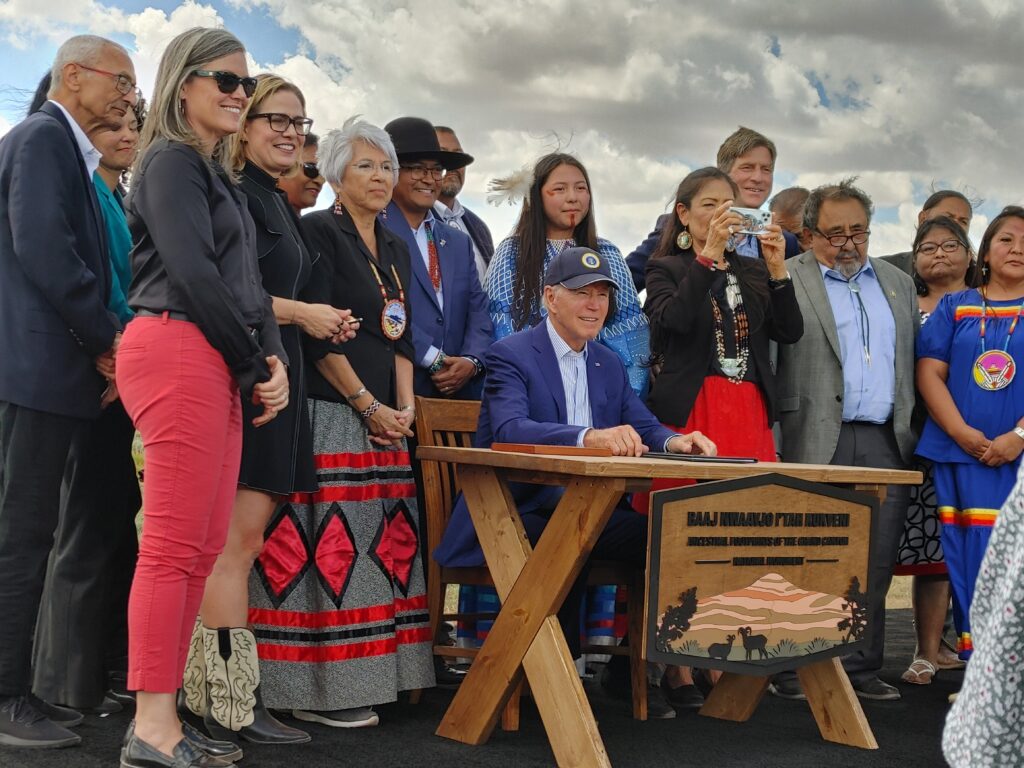
CRIT Chairwoman Amelia Flores said, “The Colorado River is indistinguishably  connected to the lands of the Baaj Nwaavjo I’tah Kukveni Grand Canyon National Monument. This monument protects the health of the Colorado River, the surrounding lands, and the irreplaceable cultural resources.   This ruling designation honors the tribal connections to the surrounding lands and the value of tribal stewardship in protecting the waters that flow through the Grand Canyon down to our reservation.”

Leadership from the Colorado River Indian Tribal Council served a major role in the official designation of the Monument an attended its dedication ceremony in August 2023.