Per the notice attached below, official comments must be made in writing to CRRMC, therefore comments made on Facebook will not be considered official.
Any individual, group, or agency may submit written comments on the ERR (Environmental Review Record) to the Colorado River Residential Management Corporation, Morris P. Sevada III, Executive Director. All comments received by September 24, 2024, will be considered by the Colorado River Indian Tribes prior to authorizing submission of a request for release of funds. Comments should specify which Notice they are addressing.
Please mail any comments to:
Colorado River Residential Management Corporation
PO Box 3427
Parker, Arizona 85344


Arizona Budget Proposal Includes Major Funding for Colorado River Protection
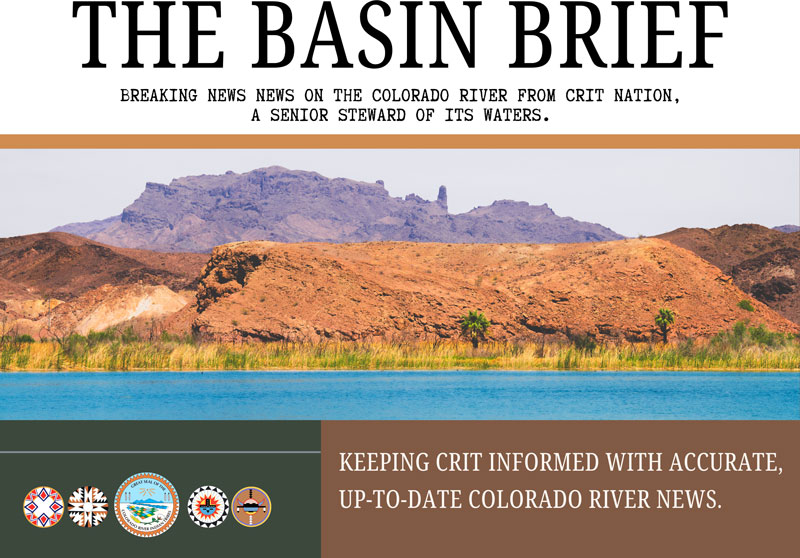
On January 16, 2026, the Arizona Department of Water Resources (ADWR) shared details of Governor Katie Hobbs’ FY 2027 Executive Budget Proposal focused on preparing for long-term challenges facing the Colorado River. The plan includes new and expanded funding aimed at strengthening water security across Arizona in the face of ongoing Colorado River shortages.
Key points from the budget related to water:
Source:
Arizona Water News https://azwaternews.com/2026/01/16/fy2027_execbudgetproposal/

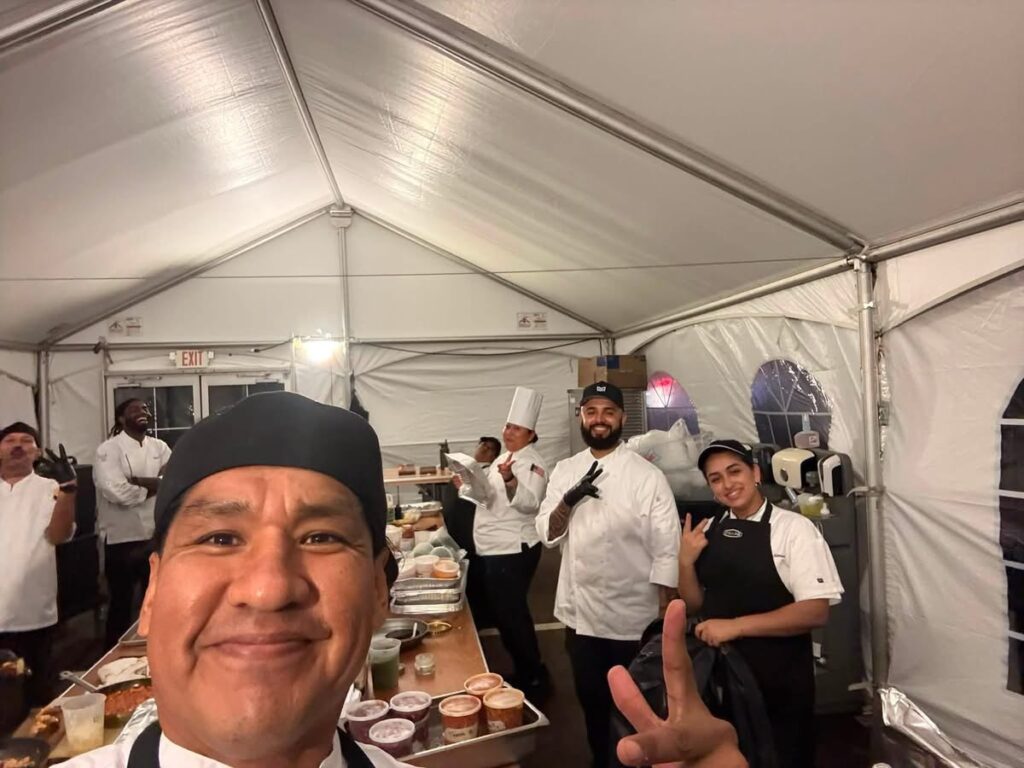
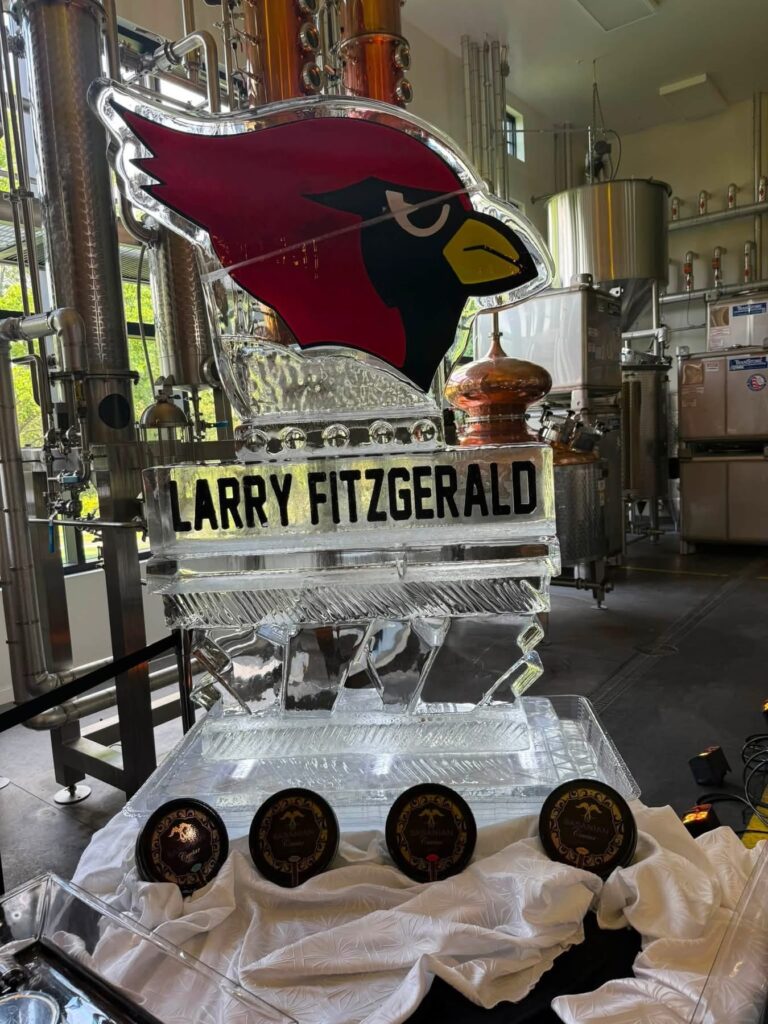
From his start as a dishwasher to his role as a head chef at Steak 44 in Phoenix, CRIT Tribal Member Quincy Stone has built a culinary career that recently took him to Canton, Ohio. There, he helped cater a banquet honoring former Arizona Cardinals wide receiver Larry Fitzgerald during his induction into the Pro Football Hall of Fame.
His aunt, Rachel Martinez, contacted CRIT Media because she wanted his hard work and accomplishment to be recognized. “It’s not every day one of our Tribal Members is invited to such an event,” Martinez said. “He doesn’t feel it’s a big deal, but I do, and I am very proud of him.”
Stone recently learned that he will travel to Beverly Hills next month to assist with additional catering events. Details about the events have not yet been announced.
Congratulations to Quincy on this accomplishment. The Colorado River Indian Tribes wishes him continued success as he represents the CRIT community and continues building his culinary career. Congratulations, Quincy on all your success and you always have the support from your home, the Colorado River Indian Tribes.

Location: Desert Sun Development #86 (100 Homes) Parker Arizona, 85344
Incident: Shooting
******Update******
At this time there is no more threat to the community. Taylor Goodman is now in custody at the CRIT Men’s Detention Facility. I would like to personally thank the community for sharing the post and spreading this information for people to see and help find this person. Thank you.
Cody Paddock, Chief of Police
Colorado River Indian Tribes Police Department
Date: September 20, 2026
Location: Desert Sun Development #86 (100 Homes) Parker Arizona, 85344
Incident: Shooting
At approximately 2:52 a.m. in the morning, CRIT Dispatch received 911 calls in reference to a possible break-in at #86 Desert Sun Development. As officers arrived on scene, they found an unresponsive male subject lying at the front doorway of the residence with a single gunshot wound.
Medical and Fire were called and responded to assist the subject with life saving measures. The male subject was pronounced deceased on scene by medical personnel. Bureau of Indian Affairs Investigator and Federal Bureau of Investigations were called and responded to the scene. At this time, it was stated that a male subject fled the scene, unknown direction of travel. This is currently an active investigation.
Person of interest: Taylor Joel Goodman, Native American, Height 5’09” Weight 300 Hair: brown, Eyes: Brown. If seen, do not approach the subject, he is considered armed and dangerous. Call 911 or CRIT Police Department.
If you have any information regarding this investigation, please call the CRIT Police Department at (928) 669-1277 or the TIPPS Hotline at (928) 669-5341
This case is being investigated by the CRIT Police Department, Federal Bureau of Investigations, Bureau of Indian Affairs. We will update as soon as more information is available.
Cody Paddock, Chief of Police
Colorado River Indian Tribes Police Department
The Colorado River Indian Tribes and the Central Arizona Water Conservation District (CAWCD) have reached an agreement to deliver 9,009 acre-feet of CRIT Intentionally Created Surplus (ICS) water to the CAWCD. This represents the last remaining water CRIT made available as part of the Drought Contingency Plan (DCP) that was agreed to back in 2019.
The ICS was previously conserved between 2020 and 2022, when in response to requests from the federal government, CRIT conserved water to help stabilize Lake Mead. CRIT conserved approximately 160,000 acre-feet and was compensated $38 million for 150,000 acre-feet of conservation (the average value of that water was approximately $254 per acre-foot). There was additional conserved water of approximately 10,009 acre-feet for which CRIT was never compensated. It was converted into ICS so it would not be lost and is still behind Hoover Dam in Lake Mead.
Under the agreement, the CAWCD will compensate CRIT at $590 per acre-foot, for a total of $5.3 million, to be executed in two payments.
The CAWCD is the public agency that operates and maintains the physical infrastructure of the Central Arizona Project (CAP).
The ICS Agreements include requirements to account for system and evaporation losses, accounting, and use. By entering into this agreement now, CRIT will avoid future reductions in its ICS to account for evaporation and system losses; CRIT’s ICS water has already been allocated a 10% reduction, which is why the account balance is now 9009 acre-feet. In addition to system losses and evaporation, there are also upcoming limitations that restrict ICS recovery when Lake Mead falls to certain elevations. In agreeing to allow CAWCD to recover CRIT’s ICS, Tribal Council is being proactive in gaining compensation for this remaining water made available in the DCP prior to this water being devalued or otherwise lost. (more…)