October 19, 2026 3:49 pm
CRIT Nation, Parker, AZ
October 19, 2026 3:49 pm
CRIT Nation, Parker, AZ

According to KOLD News 13, ongoing debates over how Colorado River water should be allocated could have major consequences for Arizona farmers. Agriculture relies heavily on Colorado River water, particularly through deliveries from the Central Arizona Project.

If deeper cuts are implemented under new federal operating guidelines, many agricultural operations could face significant reductions in available water. Farmers and water managers are closely watching negotiations as federal officials work to finalize new management rules for the river after 2026.

For CRIT, these discussions are important because agriculture remains one of the largest users of Colorado River water. Decisions about water allocations across the basin could influence farming operations, economic stability, and long-term water planning throughout the region.

Source:
https://www.kold.com/2026/03/06/colorado-river-allocation-debate-could-pose-massive-impact-arizona-farmers/

According to the Los Angeles Times, officials from Arizona, California, and Nevada are urging the federal government to reconsider parts of its draft plan for managing Colorado River water shortages.

Leaders from the Lower Basin states say the proposal could shift too much responsibility for water reductions onto their states, even though they have already implemented conservation measures in recent years. The request highlights ongoing tensions between the Upper Basin and Lower Basin states as the federal government works toward new operating rules.

For CRIT and other Tribal Nations along the river, the outcome of these negotiations will shape how water shortages are shared across the basin and how the Colorado River is managed in the future.

Source:
https://www.latimes.com/environment/story/2026-03-04/trump-administration-rethink-colorado-river-plans

According to KJZZ, a new agreement involving Arizona and Mexico could move forward plans to produce desalinated ocean water that could eventually supplement Colorado River supplies.

The concept would involve building desalination facilities along the Gulf of California and transporting treated water inland. While the project would require major infrastructure and investment, supporters say it could help reduce reliance on the Colorado River during prolonged drought conditions.

For CRIT, proposals like this reflect how states are exploring alternative water sources as pressure on the Colorado River increases and long-term supply challenges continue.

Source:
https://www.kjzz.org/science/2026-03-05/could-ocean-water-help-fix-arizonas-drought-troubles-this-agreement-puts-it-one-step-closer

(more…)

According to KJZZ, Arizona water officials are pushing back against a draft federal proposal that would guide how the Colorado River is managed after 2026. Leaders from Arizona’s water agencies say the proposal could unfairly shift more water reductions onto Lower Basin states like Arizona.

The plan is part of the Bureau of Reclamation’s process to create new operating rules for Lake Mead and Lake Powell as the river continues to face long-term drought and declining flows. Arizona officials argue the draft proposal does not adequately account for previous conservation efforts already made by Lower Basin states.

For CRIT and other Tribal Nations along the Colorado River, these negotiations are critical because the final federal plan will shape how water shortages are shared and how the river system is managed in the decades ahead.

Source:
https://www.kjzz.org/politics/2026-03-04/arizona-water-leaders-push-back-on-unacceptable-draft-colorado-river-plans

According to the Colorado Sun, water experts are exploring a “conservation pool” concept that could help stabilize water levels in the Colorado River’s major reservoirs. The idea would create a reserve of water stored specifically to protect Lake Mead and Lake Powell from dropping to critically low levels.

Under the proposal, water users across the basin would contribute conserved water that could be held in reserve and used during severe shortages. Supporters say the concept could provide more flexibility in managing the river during drought conditions.

For CRIT and other Colorado River communities, ideas like this illustrate the kinds of creative management strategies being discussed as officials work to protect the long-term reliability of the river system.

Source:
https://coloradosun.com/2026/03/04/conservation-pool-path-forward-colorado-river/

According to the Imperial Valley Press, California water officials are warning that the federal government’s proposed Colorado River management plan could conflict with the Colorado River Compact and other long-standing water agreements.

State officials say parts of the draft plan could undermine legal water rights that have governed the river for more than a century. The warning highlights growing tension among the basin states as they struggle to reach consensus on how to manage declining river supplies.

For CRIT, discussions about the Law of the River, compacts, and federal authority are especially important because Tribal Nations hold legally recognized water rights that must be considered in future river management decisions.

Source:
https://www.ivpressonline.com/news/california-warns-federal-government-proposed-colorado-river-plans-may-violate-century-old-water-compact/article_4a907700-e5ee-45f7-81a4-b68bbaccda4b.html

(more…)

According to KTAR News, decisions being made about the future management of the Colorado River will have major consequences for Arizona’s water supply. State leaders say upcoming federal decisions on post-2026 river operations could determine how much water Arizona receives during future shortages.

The Colorado River supplies water to millions of people across the Southwest and supports agriculture, cities, and power generation. As negotiations among the seven basin states remain unresolved, federal officials may ultimately have to determine how water reductions are shared.

For CRIT and other Tribal Nations along the Colorado River, these decisions are especially important because new operating rules will guide how the river is managed for decades and could influence water deliveries, infrastructure planning, and long-term water security.

Source: https://ktar.com/watch/why-is-the-colorado-river-water-decision-so-important-for-arizona/019cb1b8-04a8-8008-fe65-539f29394f62/

According to 9News Denver, the seven Colorado River Basin states have missed key deadlines to reach a new agreement on how to manage the shrinking river. With negotiations stalled, the federal government may ultimately step in and set new operating rules.

The U.S. Department of the Interior has been working with the states to develop guidelines for managing Lake Mead and Lake Powell after 2026, when current shortage agreements expire. Without consensus among the states, federal officials could impose a plan to prevent reservoir levels from dropping to dangerously low levels.

For CRIT, federal involvement in Colorado River operations is significant because Tribal Nations are key stakeholders in the river system. Decisions made during this process could affect water allocations, infrastructure planning, and the long-term stability of the river that supports communities across the basin.

Source: https://www.9news.com/article/news/local/states-miss-colorado-river-deadlines-trump-administration-could-make-new-rules/73-d4a4f18c-a07e-4c3a-97d3-d587bfd3db89

(more…)

According to 12News (KPNX), Arizona leaders say the state is approaching a critical moment as Colorado River negotiations continue and water cutbacks remain likely. Officials described the situation as a crossroads, warning that the next few years will require difficult decisions about conservation, water use, and long-term planning.

The looming reductions stem from ongoing negotiations over post-2026 operating rules for the Colorado River, which will determine how water shortages are shared among the seven basin states. Arizona has already taken significant reductions under earlier shortage agreements, and additional cuts could affect cities, agriculture, and water providers across the state.

For CRIT and other Tribal Nations along the river, these discussions are important because future operating guidelines will shape how the Colorado River is managed for decades. Tribal water rights, infrastructure investments, and long-term planning will all be influenced by how states and the federal government resolve these negotiations.

Source: https://www.12news.com/video/news/politics/sunday-square-off/were-at-a-crossroads-water-cutbacks-looming-for-az/75-f1cfe83a-b724-42e9-9b6c-e7ae04a9a4a8

According to the Arizona Republic, scientists say the western United States may not simply be experiencing a drought but a long-term shift toward a drier climate known as “aridification.” Researchers say the region has effectively been in a 32-year drought, but climate patterns suggest the West could remain permanently drier than historical averages.

This shift is affecting the Colorado River Basin, where reservoirs like Lake Mead and Lake Powell remain far below historic levels despite occasional wet years. Scientists say warmer temperatures cause more water to evaporate and reduce snowpack that normally feeds the river.

For CRIT, this concept of aridification is important because it changes how water planning is approached. Instead of preparing for drought cycles followed by recovery, water managers may need to plan for a permanently smaller Colorado River supply.

Source: https://www.azcentral.com/story/news/local/arizona-environment/2026/03/02/arizona-32-year-drought-may-now-be-aridification/87954422007/

According to KJZZ, lawmakers introduced around 30 groundwater-related bills during the current Arizona legislative session, but most proposals do not directly focus on conservation. Instead, many of the bills address water development, transportation, or regulatory changes.

Arizona groundwater policy has become a growing concern as communities increasingly turn to underground aquifers to supplement shrinking Colorado River supplies. Some lawmakers and water experts argue stronger conservation policies are needed to protect these aquifers for future generations.

For CRIT and other Tribal communities, groundwater policy is significant because it influences regional water demand and long-term water sustainability across Arizona. As Colorado River supplies tighten, groundwater management decisions could shape how the state balances growth with water availability.

Source: https://www.kjzz.org/politics/2026-03-02/30-arizona-groundwater-bills-were-introduced-this-year-most-arent-aimed-at-conservation

(more…)

According to KJZZ News, environmental groups are warning of serious long-term impacts to the Colorado River system after negotiators missed another deadline to finalize future water management rules. Advocates say declining reservoir levels, ongoing drought, and delayed agreements could increase pressure on ecosystems, agriculture, and water supplies across the Southwest. The warnings highlight growing urgency for coordinated conservation and policy action. For CRIT, these discussions are important because federal decisions about river operations directly influence how tribal water rights are protected and how long-term water stability is maintained.

Source: KJZZ News — https://www.kjzz.org/politics/2026-02-19/environmental-groups-warn-of-dire-impacts-after-colorado-river-negotiators-miss-another-deadline

According to Nevada Public Radio, Colorado River negotiations continue to face challenges as states balance drought impacts, water demand, and competing priorities. Officials involved in the talks say progress has been uneven and that future agreements may require difficult compromises across the basin. Continued uncertainty highlights the complexity of managing the river under changing climate conditions. For CRIT, ongoing interstate negotiations remain important because federal and regional policy decisions directly affect how tribal water rights are recognized and protected.

Source: Nevada Public Radio — https://knpr.org/show/knprs-state-of-nevada/2026-02-20/nevadas-main-water-negotiator-talks-about-the-bumpy-road-ahead-in-the-colorado-river-discussions

According to Newsweek, recent data shows some improvement in Lake Mead water levels following storms and conservation efforts, offering cautious optimism for the Colorado River system. However, experts note that long-term drought conditions still pose significant challenges and continued conservation will remain essential. Reservoir levels remain a key factor in determining water deliveries across the basin. For CRIT, reservoir conditions remain important because federal operational decisions tied to storage levels directly affect how tribal water allocations are managed and protected.

Source: Newsweek — https://www.newsweek.com/lake-mead-water-levels-get-good-news-11557968


According to Arizona Water News, Arizona and its Lower Basin partners say they remain committed to finding common ground on new Colorado River operating rules despite stalled negotiations among the seven basin states. Officials emphasized continued collaboration with federal agencies and neighboring states to stabilize water supplies beyond 2026 as drought conditions persist. The effort reflects ongoing attempts to balance conservation, water demand, and long-term river sustainability. For CRIT, these negotiations remain important because federal and interstate agreements directly influence how tribal water rights are recognized and protected in future Colorado River management decisions.

Source: Arizona Water News — https://www.azwater.gov/news/articles/2026-02-19

According to the Navajo Times, federal officials are moving forward with developing new Colorado River operating guidelines even as state negotiations remain stalled. The Department of the Interior is continuing its environmental review process to prepare for post-2026 river management, highlighting the federal government’s role when states cannot reach consensus. Tribal consultation remains part of that process. For CRIT, federal involvement is significant because Colorado River policies shaped at the federal level directly affect tribal water rights, long-term planning, and regional water security.

Source: Navajo Times — https://navajotimes.com/reznews/federal-officials-move-forward-on-colorado-river-operating-rules-as-state-negotiations-stall/

According to ABC 15 Arizona, tribal nations along the Colorado River are among those with the most at stake as negotiations over future water allocations continue. Tribal leaders emphasize the importance of protecting established water rights while ensuring sustainable solutions to ongoing drought conditions. The article highlights how tribal participation is increasingly central in discussions about the river’s future. For CRIT, these conversations are especially important because tribal sovereignty and water rights remain critical factors in how Colorado River resources are managed across the basin. (more…)

Article written by CRIT Media Reporter Ariana Romero

The young men of the Parker Broncs football team have shown strength, endurance, and determination throughout an incredible season. The Broncs remain undefeated at 8-0, but tonight, there is even more on the line.

Parker will take on Arizona Lutheran Academy in a battle for the 2A Metro 2 region title. Both teams enter the matchup undefeated in region play, with the Broncs looking to protect their perfect season in their final home game of the regular season.

Tonight will also mark Senior Night, giving the Parker community an opportunity to recognize the seniors who will take their home field one more time. After years of practices, games, and representing Parker High School, the seniors have a chance to close out their final home game with a region title on the line.

Kickoff is set for 7 p.m. at Joe Bush Stadium, and the Broncs are hoping to see the community pack the stands, get loud, and bring the energy.

Hard Work, Brotherhood, and One Goal

Being undefeated means a lot to this group of young men. The work behind their 8-0 record started long before Friday nights under the lights. Players trained through Parker’s extreme heat, spent hours lifting weights and conditioning, and continued working in the classroom to maintain the grades needed to compete.

During interviews with CRIT Media, one thing became clear: this is a TEAM.

When asked to describe their teammates and what has made this season special, the players gave many of the same answers: brotherhood, family, and best friends. Their similar responses reflected the bond they have built through long practices, workouts, wins, and challenges together.

That bond was just as noticeable while speaking with the team. The players were humble, polite, and proud to be Parker Broncs. Each showed respect for his teammates, coaches, and the game. While an undefeated record is something to celebrate, their focus remains on what is still ahead.

Their goal for the season is simple: keep winning and bring home the trophy. (more…)

Chairwoman Flores says CRIT And Tribal Governments must have a meaningful voice in decisions affecting the Colorado River and future generations

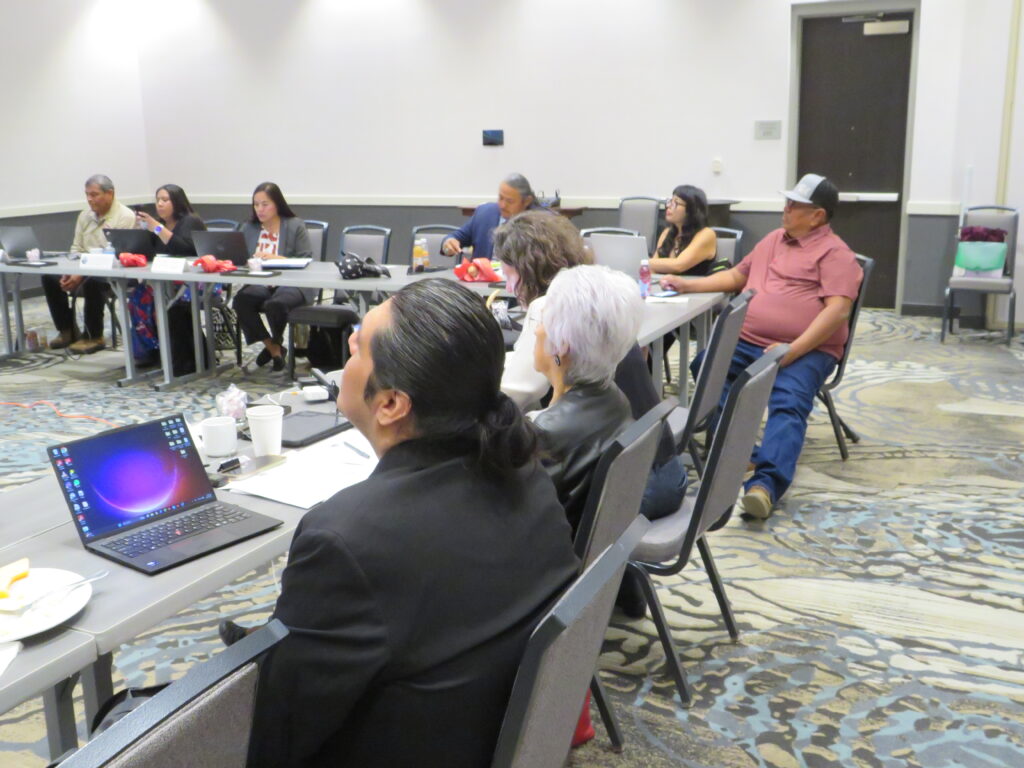
(SCOTTSDALE, Ariz.) Colorado River Indian Tribes leaders carried a message rooted in the Reservation’s past, present and future to the Ten Tribes Partnership meeting Wednesday: CRIT’s water rights must be protected, and tribal governments must have a meaningful voice in decisions shaping the Colorado River.

CRIT Chairwoman Amelia Flores chaired the October 14 meeting, joined on site by Tribal Councilmember Tommy Drennan. CRIT water attorney John Bezdek and other CRIT Tribal Council members participated remotely. CRIT’s presentation  outlined the legal protections surrounding CRIT’s water rights and concerns about federal proposals that could threaten them.

With river levels declining and demand continuing to grow, Flores said tribal governments cannot remain on the sidelines as decisions are made about how the Colorado River is managed.

“We need to be included. We have the solutions,” Flores told representatives of the other tribes.

She said tribal leaders have spent years fighting for a meaningful role in Colorado River negotiations—decisions with direct consequences for CRIT lands, resources and future generations.

“I think we got a small corner of the room,” Flores said. “We’re allowed in, but yet we still are not at the table.”

Bezdek’s presentation focused on CRIT’s longstanding water rights, which were recognized by the U.S. Supreme Court in the landmark Arizona v. California decision in 1963 and the subsequent 1964 decree.

Those rights date to the establishment of the Colorado River Indian Reservation in 1865, predating Arizona statehood and the creation of the Bureau of Reclamation.

“Because at CRIT, we are not a contractor, our water rights predate the Bureau of Reclamation,” Bezdek said.
He explained that CRIT’s water rights are not subject to evaporation and transportation losses that can apply to other Colorado River water users.

At the center of CRIT’s concern are Bureau of Reclamation proposals to spread shortages proportionally among water users, regardless of their established rights. Bezdek said those “pro rata” reductions could erode the priority system that protects senior water rights, including CRIT’s.

Bezdek said the Bureau of Reclamation has included the possibility of proportional reductions in two recent environmental reviews, despite objections from CRIT.

He argued that such reductions would violate the Supreme Court decree, undermine the Winters doctrine protecting federally reserved tribal water rights and raise constitutional concerns.

“It would basically just write it out of existence,” Bezdek said of the Winters doctrine, warning against abandoning the priority system during water shortages.

He said CRIT successfully pushed back against the latest proposal, resulting in federal acknowledgment that water shortages would be handled through voluntary agreements or, absent such agreements, the existing priority system.

Still, Bezdek said the repeated appearance of proportional reductions in federal planning documents is reason for concern.

“We continue to remain vigilant because we believe this will come back again,” Bezdek said.

He emphasized that the issue extends well beyond CRIT.

“This is not just a CRIT issue. This is not just a five tribes issue. This is every tribe,” he said.

For CRIT, protecting its water rights is only part of the challenge. The Tribes’ ability to put that water to use on the Reservation also depends on the aging Colorado River Indian Irrigation Project, which serves tribal agricultural lands in Arizona.

Authorized in 1867, it is the oldest Indian irrigation project in the United States. Bezdek said years of inadequate federal funding have left the system in serious disrepair, with irrigation efficiency estimated at approximately 56% to 58%, according to his presentation.

He explained that water lost through the inefficient system eventually returns to the Colorado River, benefiting other water users while limiting CRIT’s ability to fully use its entitlement.

“They were the beneficiaries of the Bureau of Indian Affairs chronically underfunding the project,” Bezdek said, referring to other water users.

CRIT has received a Bureau of Reclamation grant to study what it would take to modernize the irrigation system to 21st-century standards. (more…)